Pain Point 7 – Lack of Team-Based Performance Measurement
Many organizations collect performance data but struggle to use it effectively. Metrics are scattered across spreadsheets, reviewed inconsistently, or surfaced too late to influence decisions. As a result, teams operate reactively, and leaders lack timely insight into whether processes are performing as intended.
Why this matters
When performance measures are not clearly defined, visible, and reviewed at the right level, early warning signs are missed. Issues escalate before they are addressed, opportunities for improvement go unnoticed, and decision-making becomes reactive rather than proactive. From a compliance perspective, this frequently shows up as weak monitoring and measurement practices—particularly against requirements such as ISO 9001 Clause 9.1—leading to audit findings, inefficiencies, and unnecessary corrective actions. From a business standpoint, it results in slower response times, wasted effort, and inconsistent results.
The better way
A clear, team-focused performance dashboard that makes key process measures visible and actionable. By consolidating KPIs into a single, dynamic view:
Teams can see how their processes are performing in real time
Trends and risks are identified earlier
Data-driven decisions become part of daily operations
Performance monitoring supports improvement rather than compliance alone
When measures are visible and meaningful, accountability and improvement follow naturally.
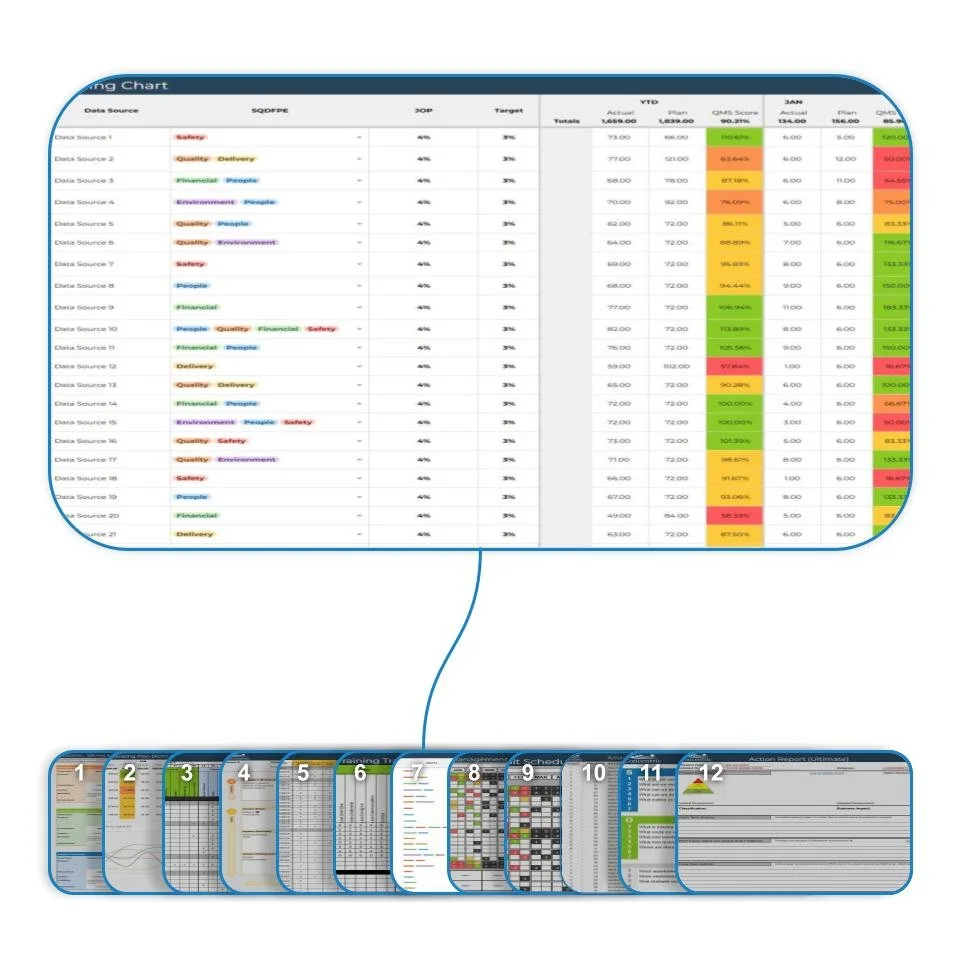
Tool 7: Process Measures Dashboard
The Process Measures Dashboard provides a real-time, visual view of key performance indicators tied directly to organizational and process-level objectives. Designed to support team-based ownership, it brings together metrics, targets, and trends in a single, easy-to-understand format.
Built in a flexible, spreadsheet-based environment, the dashboard balances simplicity with functionality. It supports automated updates, customizable visuals, and direct linkage to process definitions, goals, and audit activities. Developed and refined through more than 15 years of practical use, the tool enables organizations to monitor performance without overwhelming teams with data.
This tool turns measurement into insight—and insight into action.
How Tool 7 Fits into the 12 Tools™ System

The Process Measures Dashboard connects planning and execution. It draws directly from the goals defined in Tool 2 and the processes documented in Tool 4, providing the data needed to support audits, management review, risk assessment, and corrective action. Without visible performance measures, improvement efforts lack direction and credibility.
Apply the dashboard to a critical process, refine the measures with your team, and share what works. The 12 Tools™ Methodology grows stronger through real-world application and practitioner insight.
Other Commonly Used Tools (and Their Limitations)
Google Looker Studio
A free platform for building dashboards and visualizing data in real time.
Strength: Strong integration with Google tools.
Limitation: General-purpose analytics with limited alignment to ISO-based management systems.Tableau
A powerful analytics tool for advanced visualizations and trend analysis.
Strength: Highly flexible and visually rich dashboards.
Limitation: Higher cost and learning curve for everyday operational use.Microsoft Power BI
A business intelligence platform for real-time dashboards and reporting.
Strength: Robust data connectivity and enterprise scalability.
Limitation: Best suited for Microsoft-centric environments and dedicated BI support.Klipfolio
A cloud-based KPI monitoring tool with alerts and integrations.
Strength: Accessible option for team-level dashboards.
Limitation: Setup can become complex as metrics and dependencies grow.