
Pain Point 6 – Uncoordinated or Inconsistent Auditing Activities
Many organizations approach internal audits reactively. Schedules slip, scope changes at the last minute, and coverage depends on availability rather than risk or performance. What should be a disciplined management activity often becomes a compliance scramble.
Why this matters
When internal audits are not planned, scheduled, and tracked systematically, key risks are missed and coverage becomes inconsistent. This frequently leads to audit surprises, repeat findings, and nonconformities against requirements such as ISO 9001 Clause 9.2. From a business perspective, poor audit discipline drains time and resources, creates unnecessary rework, and weakens confidence in the management system—particularly in growing organizations or those operating across multiple processes or sites.
The better way
A structured internal audit program that is planned intentionally, executed consistently, and reviewed regularly. By clearly defining:
Audit scope and frequency
Risk- and performance-based priorities
Auditor assignments and responsibilities
Status, findings, and follow-up
audits shift from reactive events to proactive tools for improvement. Issues are identified earlier, corrective actions are more focused, and external audits become far more predictable.
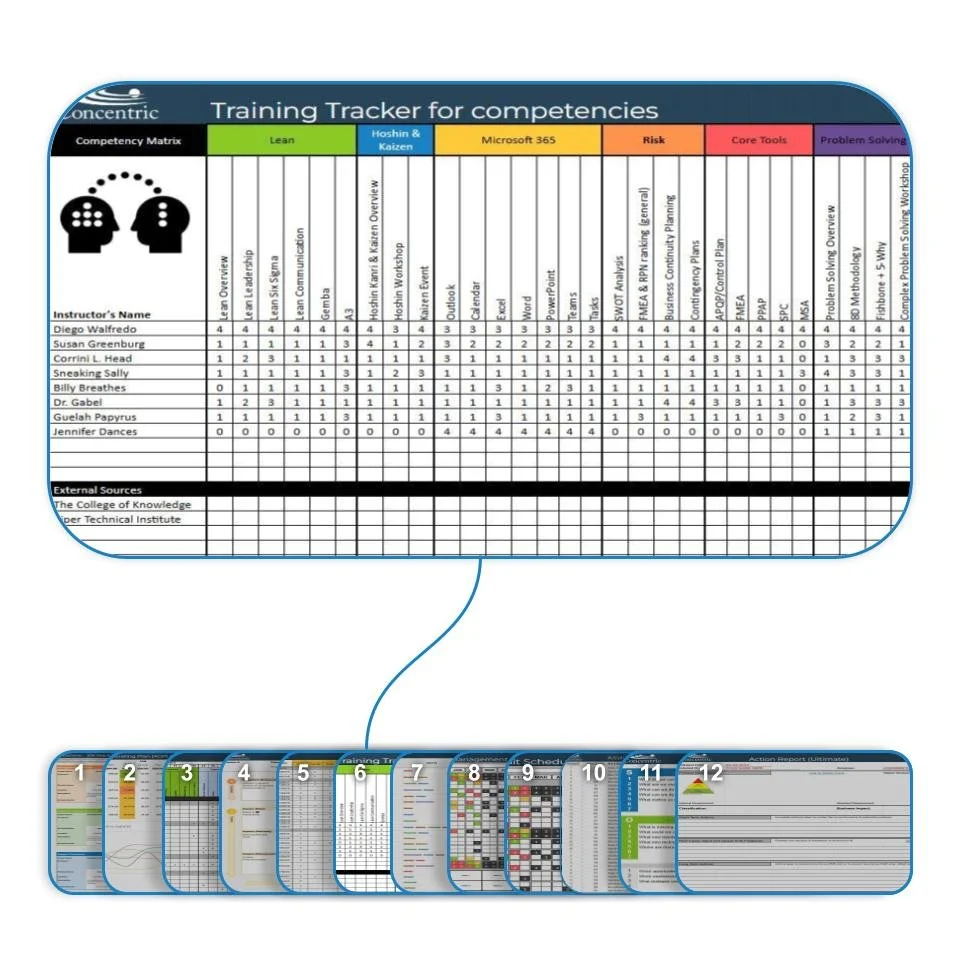
Tool 6: Internal Audit Program & Schedule
The Internal Audit Program & Schedule provides a centralized, structured approach to planning and managing internal audits. It enables organizations to define audit scope, frequency, and ownership while tracking execution and completion in a single, visible system.
Built in a flexible, spreadsheet-based format, the tool supports risk-based scheduling, automation, and easy updates as priorities change. It integrates directly with process definitions, performance metrics, corrective actions, and management review. Refined through more than 15 years of real-world application, it allows organizations to maintain audit discipline without adding unnecessary administrative burden.
This tool turns internal audits into a consistent source of insight—not disruption.
How Tool 6 Fits into the 12 Tools™ System

The Internal Audit Program connects performance monitoring (Tool 7), risk assessment (Tool 11), and corrective action (Tool 12) into a closed-loop improvement system. It validates whether processes are working as intended and whether controls remain effective over time. Without a disciplined audit program, improvement efforts lack independent verification.
Apply the program to your current audit cycle, adjust priorities based on risk and performance, and keep it visible. Practitioner input continues to shape how this tool evolves.
Other Commonly Used Tools (and Their Limitations)
AuditBoard
A cloud-based platform for automating audit planning, execution, and reporting.
Strength: Strong risk-based workflows and reporting.
Limitation: Typically better suited for larger enterprises.TeamMate+
An audit management solution for scheduling audits and managing teams.
Strength: Robust integration with audit standards and methodologies.
Limitation: Initial learning curve and configuration effort.Ideagen
A quality-focused platform with internal audit scheduling and reminders.
Strength: ISO-aligned structure and compliance focus.
Limitation: Higher cost and broader system overhead.HighBond
A governance, risk, and compliance system for centralizing audit programs with analytics.
Strength: Data-driven insights and scalability.
Limitation: Can be complex for teams new to formal audit programs.