
Pain Point 2 – Inability to Translate Strategy into Actionable Goals
Organizations routinely define strategic objectives—growth targets, quality goals, compliance commitments—but struggle to convert those intentions into clear, measurable plans that teams can execute. As goals move down through the organization, alignment erodes, priorities blur, and “strategy” becomes disconnected from day-to-day work.
Why this matters
When strategic objectives are not broken down into actionable, measurable goals, teams work hard but not always in the right direction. Resources are consumed by well-intended but misaligned initiatives, progress becomes difficult to assess, and leadership lacks objective evidence that plans are being executed. From a compliance perspective, this gap frequently appears as weak or non-measurable quality objectives, poor linkage between leadership intent and operational plans, and audit findings tied to ineffective planning and monitoring.
The better way
A clear, visual structure that cascades strategy into aligned goals at every level of the organization. A well-designed goal tree connects high-level business objectives to functional and team-level plans, complete with measurable targets, owners, and timelines. With this approach:
Strategy is clearly understood across the organization
Teams know how their work supports business objectives
Progress is visible and measurable
Compliance becomes an outcome of disciplined execution, not a separate effort
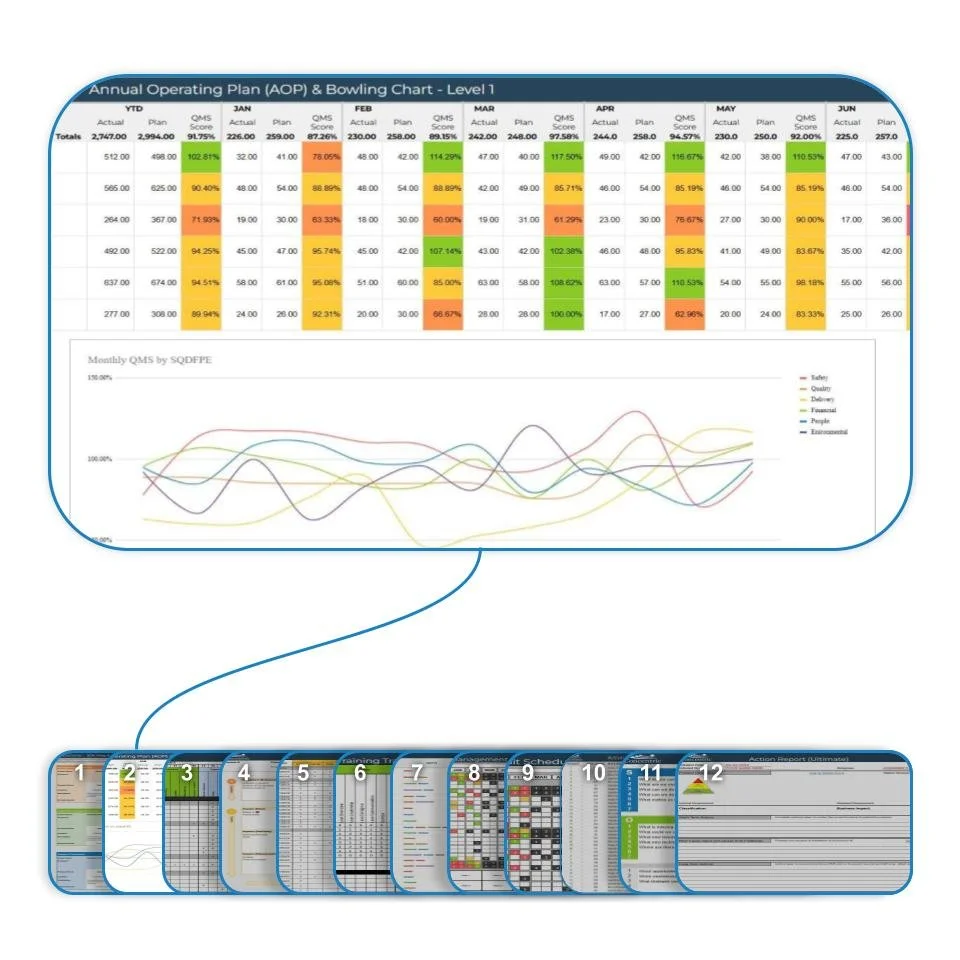
Tool 2: Goal Tree & Annual Operating Plan (AOP)
The Goal Tree & Annual Operating Plan (AOP) transforms strategic intent into an executable plan. It provides a structured, visual method for breaking down business goals into measurable objectives by function and team—while maintaining clear alignment to the organization’s strategy.
Built in an interactive, spreadsheet-based format, the tool combines goal hierarchy, KPI definition, ownership, and timelines into a single, integrated system. It is designed to support annual planning while remaining flexible enough to adapt as priorities shift throughout the year. Refined through more than 15 years of practical application, it serves as the planning backbone of the 12 Tools™ Methodology and integrates directly with performance metrics, audits, and management review.
This tool ensures that planning is not just documented—but executed.
How Tool 2 Fits into the 12 Tools™ System

The Goal Tree & AOP builds directly on the organizational clarity established in Tool 1. Once processes and ownership are defined, this tool translates strategy into actionable plans that drive execution, measurement, and accountability. Downstream tools—process measures, audits, and management review—depend on this alignment to be effective.
Explore the tool, apply it to your current planning cycle, and share what works and what does not. The 12 Tools™ Methodology is continuously shaped by real-world use and practitioner feedback.
Other Commonly Used Tools (and Their Limitations)
Weekdone
An OKR-focused platform for aligning team goals with company objectives.
Strength: Simple goal alignment and weekly check-ins.
Limitation: Limited focus on ISO-aligned planning and compliance integration.AchieveIt
A strategic execution platform that visualizes goals and tracks progress through dashboards.
Strength: Strong support for annual strategic plans.
Limitation: Higher cost and complexity for smaller teams.ClearPoint Strategy
A balanced scorecard and strategy management tool with strong KPI reporting.
Strength: Robust metrics and reporting capabilities.
Limitation: Steeper learning curve and heavier administrative effort.Asana
A project and task management platform that links objectives to execution.
Strength: Broad collaboration and integration features.
Limitation: General-purpose tool not designed for structured AOP or compliance systems.